Rules you can read
Rules are kept as configuration your team can review, rather than buried in code.
Use configured rules for repeatable decisions and AI where interpretation is useful. Keep the inputs, workflow steps and review decisions available for investigation. Test changes against representative cases before a controlled release.
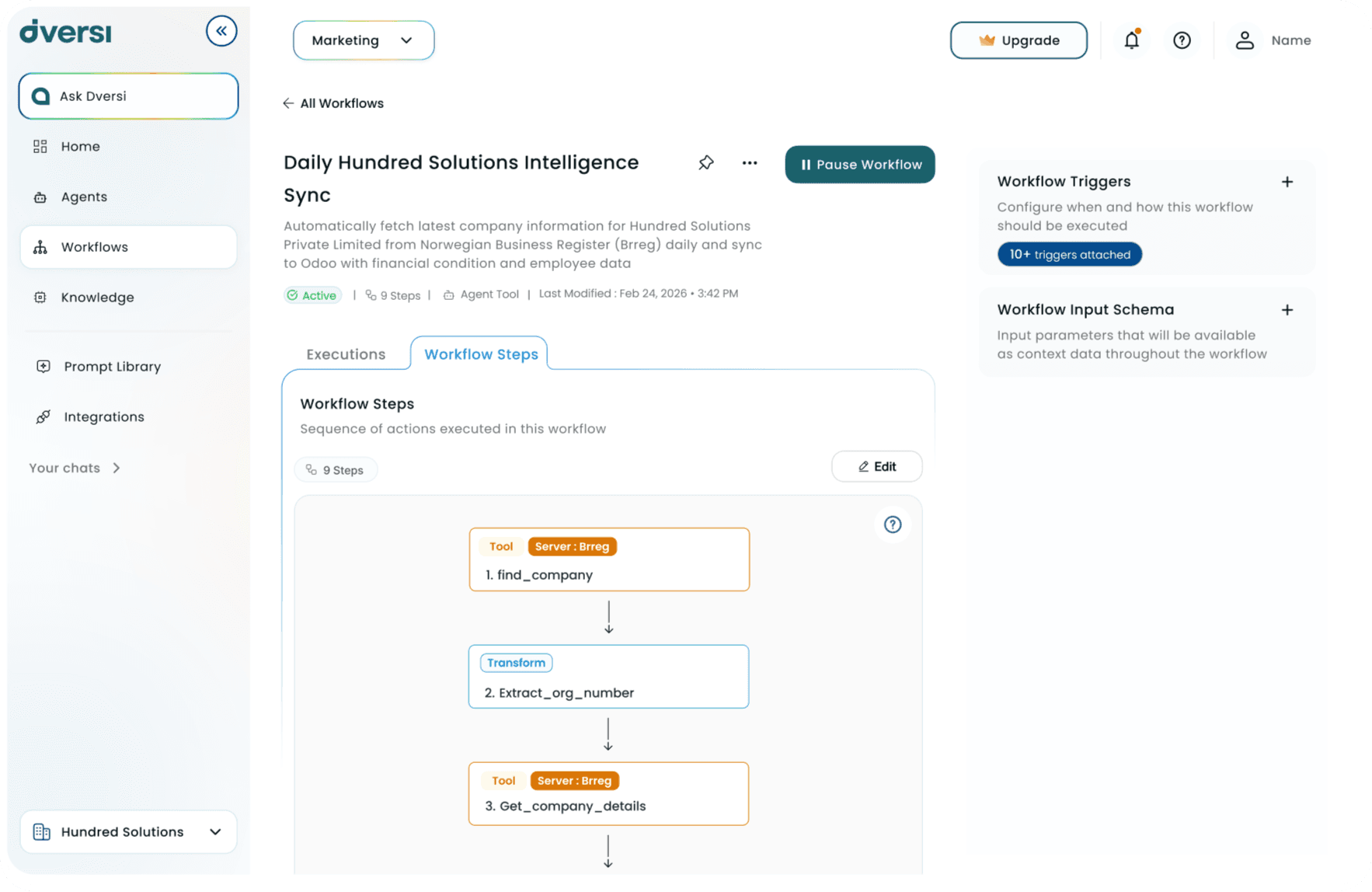
What happens when a case runs through a workflow, and what stays available afterwards.
Workflows are for the steps that must follow your configured rules and branches every time a case runs.
Rules are kept as configuration your team can review, rather than buried in code.
Configured steps follow the same logic on every run, so similar cases get similar outcomes.
When a case needs a person, the workflow waits for their decision and continues from there.
Each run keeps its inputs, the steps taken and the decisions made along the way.
Improving a workflow should be as controlled as running it. This is the practice we recommend.

Use investigated cases to show what should change and why.

Describe the rule change and the reason for it, for review by the rule owner.

Run the change against a set of known cases and compare the outcomes before release.

Apply the change once it is approved, with the new rule version recorded.
Check it on real cases, then run it with a record of every step.
How DVERSI workflows are configured, run and changed.
See how a configured workflow handles property risk assessment, then discuss your own process.


